
Limited Company Buy To Let: UK Tax Benefits in United Kingdom
Buying property through a limited company in the UK suits landlords expanding portfolios, offering corporation tax rates instead of higher personal income tax. The Better Mortgage Company offers fee-free personalized mortgage advice to individuals across England, Scotland, and Wales. Limited company buy to let is dedicated to assisting clients in making informed decisions regarding various mortgage options, including first-time buyers, remortgages, buy-to-let properties, and shared ownership. Eligibility depends on the purchase reason, personal tax position, and property plans.
Why buy property through a limited company?
Buying property through a limited company has grown in popularity since changes to mortgage interest tax relief rules were announced in 2015 and introduced from 2017. Over 400,000 UK limited companies now hold property, according to Tide. In 2024 alone, 61,500 new companies were set up specifically to buy property.
The shift reflects a structural change in how landlords approach limited company buy to let arrangements. Purchasing investment or buy-to-let properties using a limited company offers significant advantages over buying property personally. The most notable benefits are tax efficiency and limited liability protection.
What are the main advantages of a limited company structure?
Using a limited company to buy residential, commercial, or mixed-use property offers tax advantages and protects personal assets. A limited company mortgage also opens access to lender products designed specifically for corporate ownership structures.
Key benefits include:
- Tax efficiency through corporation tax treatment of rental profits
- Limited liability protection separating personal assets from property risks
- Flexibility across residential, commercial, and mixed-use property types
- Access to specialist buy to let limited company mortgage products
How does limited company ownership protect landlords?
Limited liability protection means a landlord’s personal assets remain separate from property-related liabilities. This structural separation matters for investors building portfolios across multiple properties. A limited company landlord finance strategy also supports portfolio growth without exposing personal wealth to each individual property’s risks.
For landlords evaluating their options, the buy-to-let mortgage guide explains costs, requirements, and practical considerations in detail. The decision between personal ownership and a corporate structure depends on individual tax positions and long-term investment plans.

What do you need before you start?
Preparation determines whether a limited company property purchase proceeds smoothly or stalls. The reason for the purchase is the decisive factor that impacts eligibility for a limited company mortgage if the property is not bought outright. Lenders assess the intended use, whether for trading premises, residential letting, or investment, before approving any application.
The process of buying property through a limited company involves different types of mortgages, higher stamp duty, and extra responsibilities. Investors pursuing limited company buy to let arrangements face distinct underwriting criteria compared to personal-name purchases. A buy to let limited company mortgage typically requires the borrowing entity to be a special purpose vehicle (SPV) with no other trading activity.
What documents do lenders require for a limited company application?
Lenders request company formation documents, proof of SIC code classification, and evidence of the SPV structure. Personal guarantees from directors are standard for LLC landlord mortgage applications. Bank statements covering three to six months, along with projected rental income figures, complete the core paperwork.
How does personal tax position affect the decision?
Personal tax position and plans for the property dictate whether incorporation makes financial sense. Higher-rate taxpayers often benefit from limited company landlord finance structures because mortgage interest receives corporation tax relief rather than the restricted personal relief. Specialist advice is essential before committing to a structure, as the wrong choice creates unnecessary tax leakage.
The Better Mortgage Company offers fee-free personalised mortgage advice to individuals across England, Scotland, and Wales. Advisors review each investor’s circumstances against current lender criteria, mapping out the mortgage process from initial consultation through to completion. This guidance proves particularly valuable when navigating the additional complexity of limited company applications.
How do you set up the company structure?
Setting up a limited company for property investment follows a defined legal process. The structure chosen determines tax treatment, mortgage eligibility, and ongoing administrative obligations.
An increasing number of property investors and private landlords now opt to buy property through a limited company rather than directly. Reasons for this approach vary widely. Some investors purchase a property as a premise to trade from. Others acquire residential or commercial buy-to-let assets to generate rental income. Many treat the purchase purely as a long-term investment.
What type of company is needed for a buy-to-let property?
Most lenders require a Special Purpose Vehicle (SPV). An SPV is a limited company established solely to hold and manage property. Standard trading companies often face restricted limited company mortgage options. The Better Mortgage Company’s team of experienced advisors provide impartial services designed around each client’s unique financial circumstances, helping investors select the correct company structure before applying for a buy to let limited company mortgage.
What are the key steps to incorporate the company?
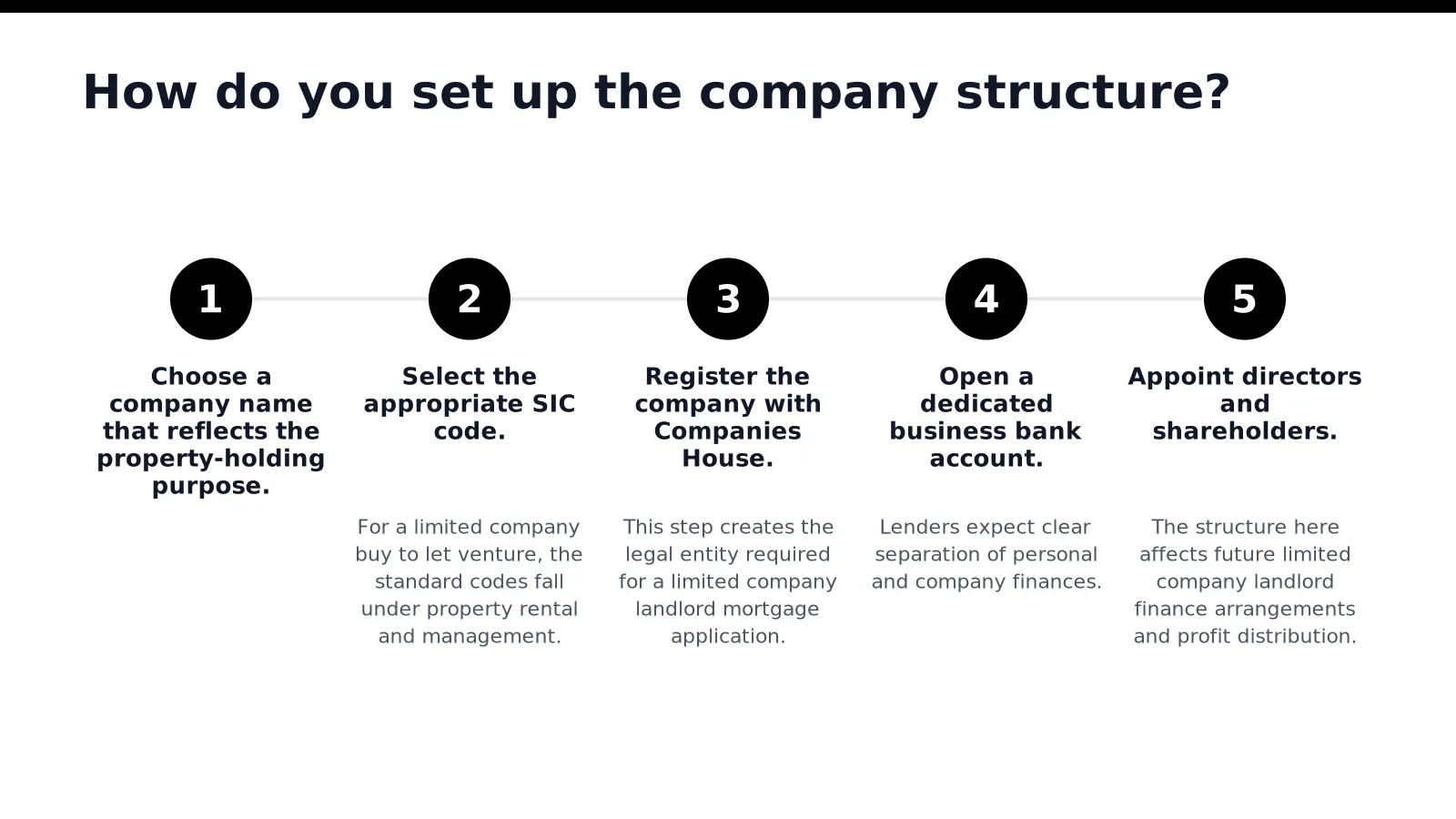
The incorporation process involves several sequential actions:
- Choose a company name that reflects the property-holding purpose.
- Select the appropriate SIC code. For a limited company buy to let venture, the standard codes fall under property rental and management.
- Register the company with Companies House. This step creates the legal entity required for a limited company landlord mortgage application.
- Open a dedicated business bank account. Lenders expect clear separation of personal and company finances.
- Appoint directors and shareholders. The structure here affects future limited company landlord finance arrangements and profit distribution.
Whether an investor plans to renovate and sell a run-down property or rent to private tenants, using a limited company is worth considering. Specialist advice proves essential at the structuring stage. Advisors at The Better Mortgage Company guide clients through these decisions, ensuring the company setup aligns with both immediate purchase goals and long-term portfolio strategy.
How do you secure the right mortgage deal?
Securing the right mortgage deal for a limited company buy to let purchase demands specialist preparation. Lenders assess limited company applications differently, and the most competitive rates often sit beyond high-street visibility. Without a structured approach, investors lose access to products that could save thousands over the loan term.
What documents do lenders require for a limited company mortgage?
Lenders typically request the company’s incorporation certificate, a Special Purpose Vehicle (SPV) memorandum and articles, and three months of business bank statements. Personal guarantees from directors are standard, so individual income proof and credit histories remain essential. A full property schedule with projected rental income completes the core paperwork.
How does the application process differ from a personal mortgage?
Purchasing a property through a business involves additional underwriting layers and distinct requirements compared to standard personal purchases, so the differences in lending criteria and tax treatment require careful attention. A limited company mortgage application involves underwriting the corporate entity alongside the directors, which adds a layer of scrutiny. Lenders also stress-test affordability using notional interest rates and rental cover calculations specific to buy to let limited company mortgage products.
The Better Mortgage Company presents offers from lenders that go beyond what is available on the high street. Advisors compare LLC landlord mortgage options across the whole market, identifying deals structured for SPV borrowing. This access proves critical for limited company landlord finance, where mainstream banks often restrict product ranges.
Follow these steps to strengthen an application:
- Instruct an accountant to prepare the company’s financial projections and confirm the SPV SIC code.
- Gather six months of personal bank statements and the latest SA302 tax year overviews for all directors.
- Obtain a rental assessment from a qualified letting agent to demonstrate projected income.
- Engage a specialist broker who reviews the full lender panel, including niche providers.
The company provides seven-day availability, promising a proactive response focused on client satisfaction. This approach suits investors who need decisions aligned with purchase deadlines. A limited company structure does not suit every situation, but it benefits many landlords, especially when securing buy-to-let mortgages through an SPV. Specialist guidance turns complexity into a clear, actionable path.
What mistakes should you avoid along the way?
A common mistake is assuming one ownership structure always wins on tax. There is no clear tax advantage either way in every situation, so the decision really depends on the client’s personal tax position. Given the variances between corporation and income tax, purchasing a property as a limited company versus a private individual requires careful consideration.
What happens if investors skip the tax comparison?
Skipping the comparison between corporation tax and personal income tax creates a real risk. An investor who assumes a limited company buy to let structure automatically saves money may face an unwelcome surprise at year end. The numbers shift with rental income, other earnings, and long-term plans.
Which mistakes cost landlords the most?
Several missteps undermine a limited company mortgage application or the wider investment plan:
- Choosing a structure before modelling the personal tax outcome
- Ignoring how lender criteria differ for a buy to let limited company mortgage
- Overlooking ongoing costs tied to a LLC landlord mortgage arrangement
- Failing to plan limited company landlord finance beyond the initial purchase
The Better Mortgage Company differentiates itself through its wide range of lender access and dedication to navigating complex mortgage situations. The company’s personalised service extends beyond the initial mortgage arrangement, offering ongoing advice and reviews of insurance policies.
Conclusion
So, the decision to buy through a limited company comes down to your personal tax position and long-term goals. Specialist advice at the structuring stage is essential, and a broker who knows the full lender panel makes the application process straightforward. You now have the steps to strengthen your application and the common mistakes to avoid, so you can move forward with confidence.